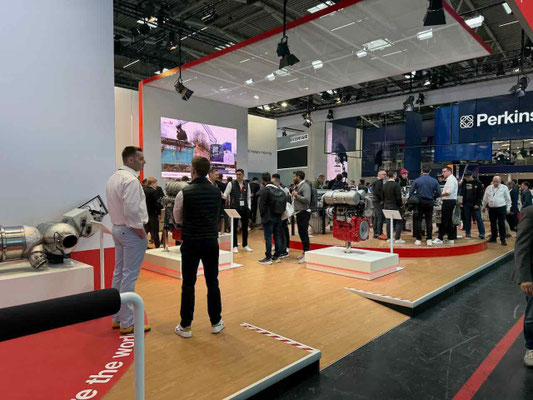
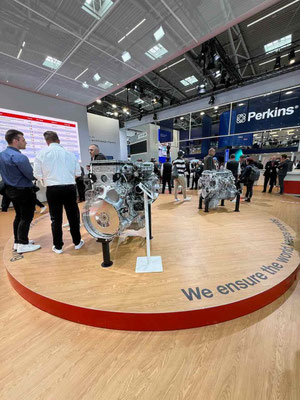
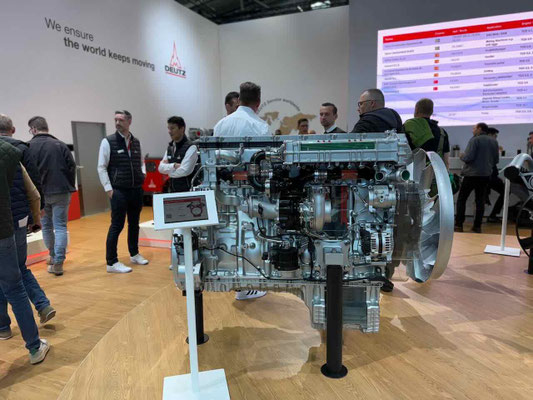
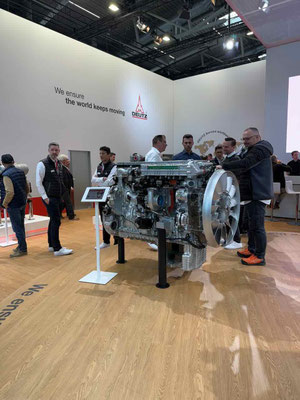
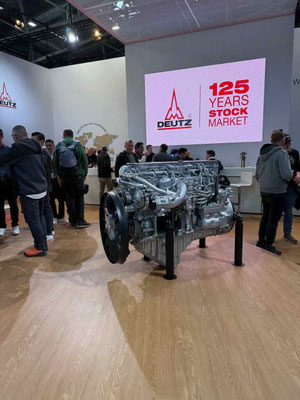
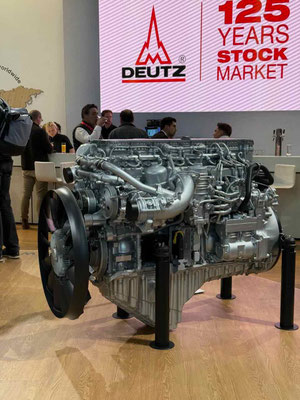
Auf der BAUMA 2025 in München zeigte die DEUTZ AG, wie sich der Übergang vom klassischen Off-Highway-Diesel zu wasserstoff- und elektrobetriebenen Alternativen heute konkret darstellt. Im Zentrum des Standes: Schnittmodelle aus drei Antriebs-Generationen, die in einer Standsekunde sichtbar machen, was im Datenblatt abstrakt bleibt.
Die Diesel-Familie — Funktion, freigelegt.
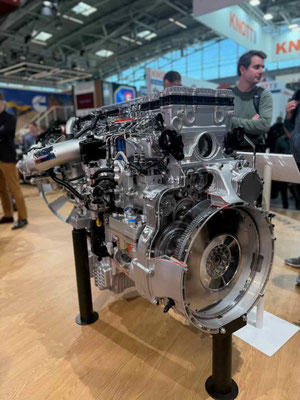
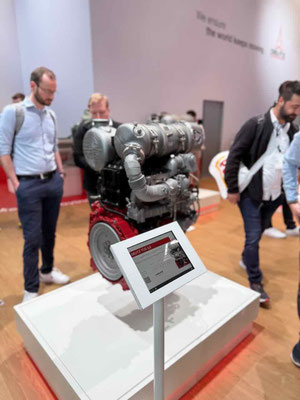
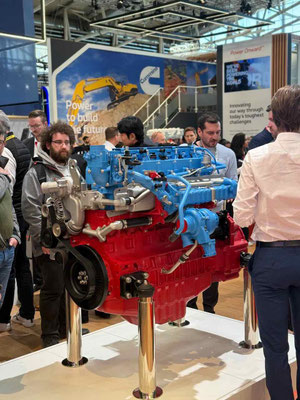
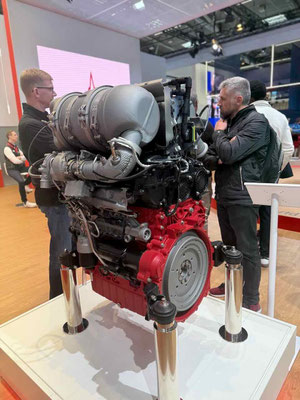
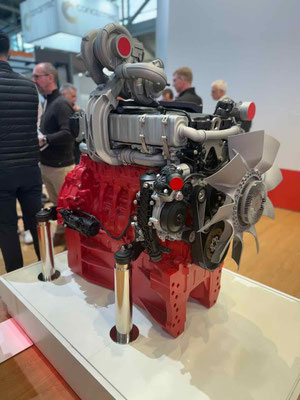
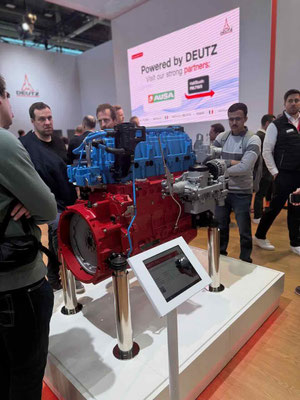
Vier TCD-Modelle decken das aktuelle Verbrennungsmotor-Portfolio für Bau- und Agrarmaschinen ab: TCD 3.9 für die kompakte Klasse, TCD 5.1, 10.7 und 12.8 für mittlere und schwere Anwendungen. Als Schnittmodelle mit farblich abgesetzten Komponenten wird an ihnen sichtbar, was beim Originalmotor unter dem Kurbelgehäuse liegt — Einspritzgeometrie, Hydraulikkreisläufe, Kühlsystem.
TCG 7.8 H2 — der Schritt, den noch keiner gemacht hat.
Das eigentliche Argument des Auftritts: der TCG 7.8 H2, weltweit erster wasserstoffbetriebener Verbrennungsmotor mit EU-Stage-V-Zertifizierung. Am Schnittmodell wird deutlich, was im Datenblatt nur eine Zertifizierungs-Kennzahl ist: derselbe Block, dieselbe Hubgeometrie wie bei der Diesel-Familie — aber mit einer Einspritz- und Verbrennungslogik, die nahezu CO₂-frei läuft.
E360 — und wenn der Verbrennungsmotor wegfällt.
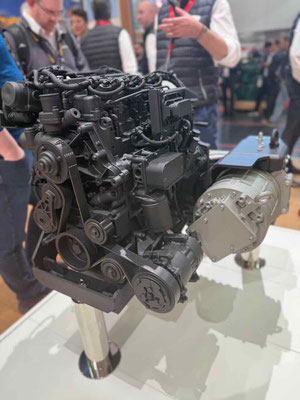
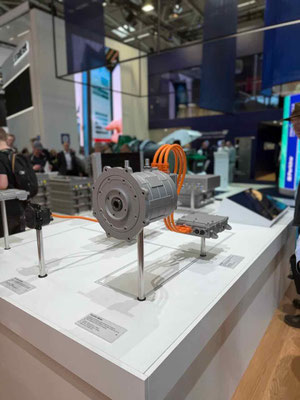
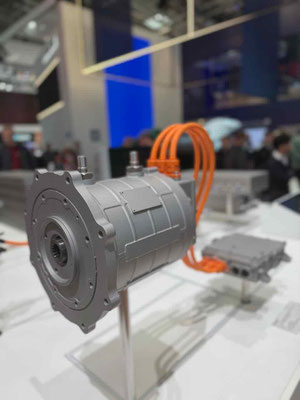
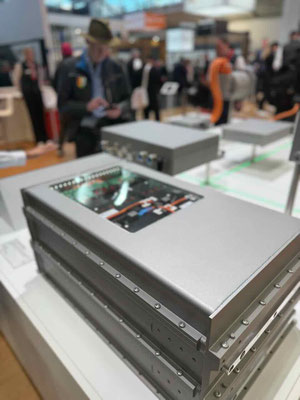
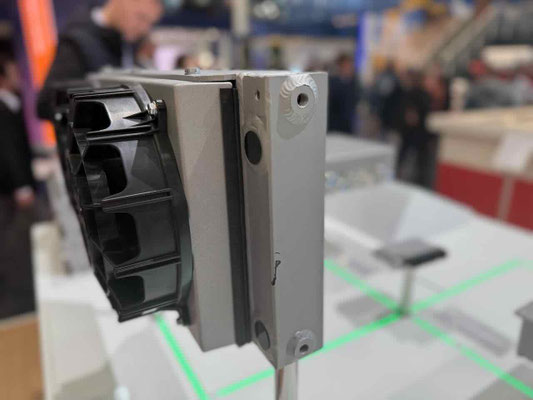
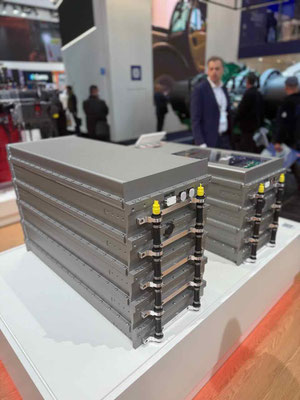
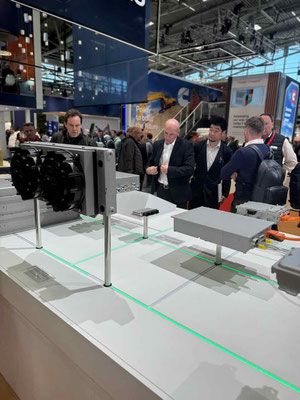
Auf der anderen Seite des Stands die E360-Plattform für vollelektrische Off-Highway-Anwendungen. Damit deckt DEUTZ in einem Auftritt das ganze Spektrum ab: Diesel, Wasserstoff, Elektro. Nicht als Konzept, sondern als anfassbare Hardware.
Auf einer Messe, auf der jeder Aussteller Antriebslösungen verspricht, wird DEUTZ zu der Stelle, an der man versteht, wie sie funktionieren. Aus drei Antriebsarten wird ein Gespräch.
Mehr zum DEUTZ-Antriebs-Portfolio: deutz.com
Drive transition, made tangible.
At BAUMA 2025 in Munich, DEUTZ AG demonstrated how the shift from classic off-highway diesel to hydrogen- and electric-powered alternatives looks in practice today. At the centre of the stand: cutaway models from three drive generations, making visible in one trade-fair second what stays abstract on a spec sheet.
The diesel family — function, exposed.
Four TCD models cover the current internal-combustion portfolio for construction and agricultural machinery: TCD 3.9 for the compact class, TCD 5.1, 10.7 and 12.8 for medium and heavy applications. As cutaway models with colour-coded components, they reveal what lies beneath the crankcase of the real engine — injection geometry, hydraulic circuits, cooling system.
TCG 7.8 H2 — the step nobody else has taken yet.
The actual argument of the appearance: the TCG 7.8 H2, the world’s first hydrogen-fuelled combustion engine with EU Stage V certification. At the cutaway model, what is merely a certification figure on the spec sheet becomes evident: the same block, the same stroke geometry as the diesel family — but with an injection and combustion logic that runs almost entirely CO₂-free.
E360 — and when the combustion engine is gone.
On the other side of the stand, the E360 platform for fully electric off-highway applications. With it, DEUTZ covers the full spectrum in a single appearance: diesel, hydrogen, electric. Not as a concept, but as hardware you can touch.
At a fair where every exhibitor promises drive solutions, DEUTZ becomes the place where one understands how they work. From three drive types, a conversation.
More on the DEUTZ drive portfolio: deutz.com